
The internet is awash with the news that the CrunchPad is dead. More accurately, dead on arrival.
I won’t regurgitate all the original details, which you can find here.
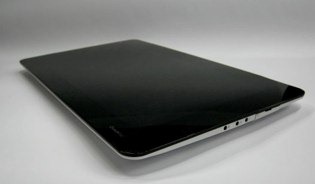
This morning (or this afternoon, depending where you are), Mike posted an update.
The letters attached make for interesting reading (even if they are long on legalese).
Originally I wrote a couple of long paragraphs before confusing even myself. But I’ll quote Mike:
There is just no way to argue that TechCrunch is not the joint owner of all intellectual property of the CrunchPad, and outright owner of the CrunchPad trademark. The CEO of Fusion Garage has spent nearly six months this year working from Silicon Valley and our offices. Most of the Fusion Garage team has spent the last three months here working with our team on the project. And our key team members have spent time in Singapore working directly on the hardware and software that powers the device. Fusion Garage emails and their own blog, before it was deleted, acknowledge this. We have also spent considerable amounts of money creating the device, paying the vendor and other bills that Fusion Garage wasn’t able to.
What’s even more absurd is the idea that we somehow knew about Fusion Garage’s intentions to break off the partnership before a couple of days prior to the device launching. Until November 17 we had every reason to believe that Fusion Garage was our trusted ally in creating the CrunchPad. We received nearly daily emails confirming that everything was on track. Raising funding for the project was a goal but wouldn’t have been necessary for some time; besides, we had U.S. investors lined up and ready to put money into the venture. Fusion Garage admitted to us on November 18 that the news of them pulling out of the partnership was “out of the blue.”
There is quite simply no way we will allow this company to move forward on this project. The extent of their fraud is only now becoming clear to me. The audacity of their scheme is staggering. We believe that they engaged with us until the last possible moment to get press attention and access to our development resources and cash, and then walk away hoping that we’d do nothing.
Other Options
Disclaimer: What I’m about to do here is be incredibly naive and view the world for a moment the way a programmer does: neat, ordered and sensible.
I wonder what solutions there are to this mess (besides legal proceedings). One is to throw money at the problem. And no, I’m not suggesting mike buys the company, or the rights.
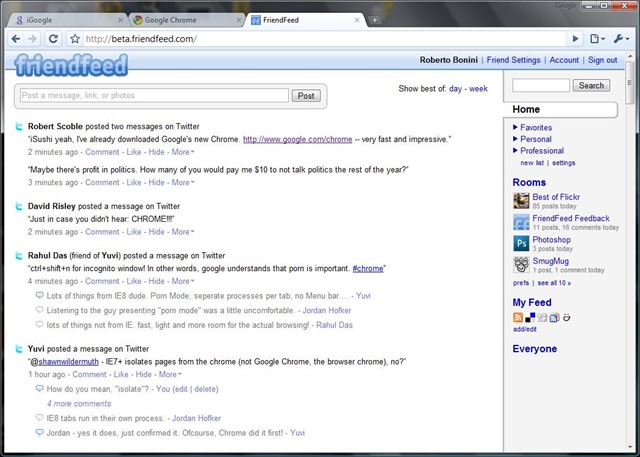
Its interesting that Mike planned to have ChromeOS running on the CrunchPad at the launch. Although the CrunchPad predates the relase of ChromeOS, it is the the very epitome of the types of devices the creators of ChromeOS envisioned running ChromeOS on.
So I think that Google, indirectly, has a stake in the success of the CrunchPad.
So, and this may seem un-orthodox, but I suggest that Google should buy out FG. Google has the money, after all.
It’s a win-win for everyone involved. Mike gets on with his Crunchpad. Google gets a posterchild for its ChromeOS (plus being able to contribute significantly to the device software to make sure the Google Experience is up to standard).
ChromiumOS is opensource. The crunchpad started out is short life as an opensourced, crowdsourced project. I can’t imagine a better match.
There is a market.
There is a market for that device, even with the iTablet looming on the horizon. I.e, Me. I’m sitting on my couch right now as I type this. A CrunchPad would be much easier than my Dell Laptop.
Knowing Apple, the iTablet will be expensive (even if its a contract device). The CrunchPad will be far cheaper (between $300 to $400 as far as i know).
Besides the price issue (and the little matter of a global recession), rumour, as well as logic has it that that Apple will impose an App Approval Process for the iTablet. And an App Store. The pros and cons of a such a move are for another post when we have more substantial information.
This stands in stark contrast with the CrunchPad
Mike says that the CrunchPad can be hacked to run Windows 7 (that would be awesome) and ChromeOS (and by extension any Linux based OS including Android).
(Actually I think Mike should have a version with no OS preloaded)
I’d much rather buy a Crunchpad I can write my own apps for. And before anyone accuses me of hypocrisy (since I like the App Store), I will not tolerate an App Store for anything approaching a work machine.
And after all the problems developers are having with the App Store, I have no intention of writing Apps for the iPhone (Apple does have the chance to change this, mind you).
Not being able to write apps for my iPhone frustrates me to no end. There are too many roadblocks.
However, with the promise of the CrunchPad, I drool at the App possibilities. Being a totally open platform, the possibilities are endless. Whether one uses ChromeOS ( more properly, ChromiumOS), Linux or Windows 7, the underlying hardware will be exposed for the developer to use.
Public Opinion is heavily in favour of the CrunchPad. Public Opinion is squarely behind Mike Arrington (yes, this includes me).
Hopefully it will live.
PS. For a fascinating discussion on the CrunchPad, listen to MacBreak Weekly 169: This Is What Happens Larry

 Random Musings