Photography: Beginning

Whew, Photography isin’t easy. You need the camera, the software,the online storage and so on. Not to mention the accessories.

I bought a Nikon D40x a few weeks ago and haven’t stopped playing with it since. Which is one reason the blog has been suffering. Got a 55-200mm lense in addition to the supplied 18-55mm lense. And a flash and tripod for night shooting. Though I might have to take the tripod back and get a better model.

After thinking about the moment for a while I finally settled on Smugmug mainly because I get a kick from dealing with faceless corporations everyday (not 🙂 ).  Take a look at their About us page to see what I mean .Plus they really have a good reputation.

I’ve got a few photo’s from holiday (4,300, to be exact – I went overboard). A good portion of that is from Luxor, Egypt and they’ll be the first ones up once I get them sorted. And I’ll cross-post the best of the best here.

I came within a whisker of splashing out and buying the Educational version of CS3 Design ( I qualify as a Second Year undergraduate). Though I definitely get it next month. What really sealed it was the fact that Smugmug  has a CS3 add-on for uploading your newly tweaked shot from within CS3. I’m getting it mainly for Photoshop, but Acrobat and Illustrator would be useful as well.

Once I have that I can start shooting in RAW and acting like a proper photographer 🙂 .

One thing that really would make life easier is a WHS Add on for Uploading straight to Smugmug from your Photos folder.

As a side note I subscribe to Thomas Hawks’ Blog. He has some really great shots.

Also see this list of the best photoblogs of 2007.

Great things to come…

Data: Mine or Theirs?

Although I’m writing this under the fallout of  Scoble-Facebook, I don’t think the issue of who owns your data is either confined only to Digital identity or has been very well thought out.

First, a roundup of the various reactions:

It’s not about data portability. It’s about trust.

Offline, my friends and I share a mutual connection. Maybe it’s around work, maybe it’s around our kids or something in our past. Whatever it is, they’re my friend because they know something about me beyond what’s easily accessible to others. Keyword here is mutual. I know a bit about them too. Their relationship with me is unique as compared to their relationship with others.

Online, those lines are blurred. For what I would guess is at least 4,500 of the 5,000 “friends” Robert Scoble has on Facebook, he is the equivalent of a magazine publisher and you are his subscriber base/audience. He says it’s mutual and that’s the beauty of the social and connected web, but he only cares about you when you put something on the table that he’s interested in. It’s not about you. Yet, he’s “sitting” right next to your real friends, getting the same information about you that you’re sharing with them. If he takes that information and abuses it, however un- or good-intentioned, it serves you both right.

Robert Scoble valued his relationship with Plaxo more than he valued his relationship with his “friends,” otherwise he would have posted to them what he was doing with an experimental, alpha-quality and untested script before he did it…or he wouldn’t have done it at all.

Judi Sohn

I think there are two questions here. The first is whether users should be able to extract their data [including social graph data] from one service and import it into another. I personally believe the answer is Yes and this philosophy underlies what we’ve been working on at Windows Live and specifically the team I’m on which is responsible for the social graph contacts platform.

Dare Obasanjo

Then there is the oft-cited  post by Paul Buchheit (the guy who created Gmail).

Now I’m not on Facebook et al for a reason: data, in the case of a person,  is that person. Whereas data for iTunes is essentially  the signals sent to your sound card. Se the difference

Is it important to guard those things? Yes, or course. At the end of the day, its all you are left with if everything goes to hell: Your sense of self and identity, and your friends ( real friends, that is).

So we essentially have two options:

  1. Manage that data ourselves in a way that gives complete and utter control over every aspect of things
  2. Give our data over to a less than trustworthy service that essentially controls who you are, your identity ( on- and off-line) and who your freinds are and what your realtionship is with them

I’ll take option one any day of the week. Why? Becuase of control. It is all about control.

Plaxo may or may not keep your data after you opt-out ( i think its the former rather than the latter). Facebook has the awesome power of wiping out very single trace of you from its universe with a simple mouse-click. Add a hundred and one other web services that suck your data out of Google, Hotmail and the like.

There is a missing element in the above situations. Find it yet? And its not trust. Its control. And I mean, complete and utter control.

At least Twitter gives you more granular control( in terms of message recipients)  and has a proper API.

Better yet, Open ID, while somewhat flawed, is a brilliant idea insofar as you have a digital identity provided and vouchsafed by a trusted source ( AOL, for example). This blog is my digital identity ( since WP supports Open ID).  I can decide what to do with that identity, what to reveal, what to password protect. If I move on to from one blog to another, I can export all my posts and import them else where.

In short I have complete control of that Open ID identity (short of running my own webserver).

So because I have control I can never be in a Scoble snafu like that ( And I don’t care for the fact that Scoble was pressing FB’s buttons on purpose – he gave up his control over that data and he knew it).

In a  sense, its the MS DOS command line all over again. And  loss of control is like letting Vista hide the RUN command and the task manager and tickle itself silly with crashes.

Nerd Humor

If you don’t read the Official Playstation.Blog from Sony, you really should be. Its really good and is a daily staple of my blog diet, along with the Gamerscore Blog from Microsoft. I don’t have either console ( 360 or PS3) , but I really enjoy reading the posts.

Take this recent post from Jason Coker, Associate Producer of the PlayStation Network title PAIN for PS3:

What I CAN tell you is that it has been a blast to work on. It hasn’t been easy, but it sure has been hilarious. Here are just a couple of the gems I’ve heard (or said):

* “Coker, can you write up a description of a little person hip-hop pirate right quick?” (Yeah, I had the same reaction. You’ll see.)

* “Ummmm….who did the voice-over for that? That’s nasty.”

* “Hey man, if I get you a big glass of water, can you step into the recording booth and belch for about half an hour?”

* “Check the Leaderboards, Son. Spank. The. Monkey.”

* “Dude, I just really don’t think the farts are loud enough.”

* “Did you just grab that Granny by her head? Do it again! Do it again!”

* “That’s him right there. We call him the Ooch Master. He can’t be touched.” (You know who you are at Idol Minds, and I’m coming for you. The student has become the Master, baby!)

* “OH, *&%*!! THAT *^&%*#@ DONUT!!!!!!”

What are you waiting for? Subscribe!!

Google Business Roundup

Thought the following Fake Steve Jobs list might be interesting funny:

  • Word processor in the cloud. Status: Done. Income: Negligible.
  • Spreadsheet in the cloud. Status: Done. Income: Negligible.
  • Photo storage in the cloud. Status: Done. Income: Negligible.
  • Calendar in the cloud. Status: Done. Income: Zero.
  • Google Earth. Status: Extremely cool.
  • Google Maps. Status: Done. Income: Zero.
  • Google Street View. Status: Not illegal, but should be.
  • Google Talk. Status: Done. Income: Zero.
  • Google Pack. Status: I know it’s around here someplace.
  • Google Ride Finder. Status: Still waiting to get picked up.
  • Google Transit. Status: Lost.
  • TV ads. Status: Uncertain.
  • Radio ads. Status: See “TV ads.”
  • Video game ads. Status: See “Radio ads.”
  • Patent searches. Status: Who cares?
  • RechargeIT hybrid car thing. See here. Status: Hybrid cars, dude.
  • Clean energy. See here. Status: Nice gesture.
  • Google Checkout. Status: Um …
  • Google SketchUp, 3-D modeling. Status: Alpha? Beta?
  • Robots on the moon prize. See here. Status: Robots, dude. On the freaking moon!
  • Google NASA. See here. Status: Awesome!
  • Neven Vision. Image recognition. (Acquired.) Status: Mindblowing.
  • YouTube videos. Status: Done. Income: Negligible.
  • Scanning books. Status: In process. Income: Zero.
  • Blogger. Status: Done. Income: Negligible.
  • RSS Reader. Status: Done. Income: Zero.
  • Google PC. Status: Vapor. Income: Zero.
  • Google OS. Status: Vapor. Income: Zero.
  • Gmail. Status: Done. Income: Negligible or zero.
  • Orkut. Status: Done. Income: Don’t know, I don’t speak Brazilian.
  • OpenSocial. Status: Pipe dream. Income: Zero.
  • VaporPhone ™. Status: Release-ware. Income: Zero.
  • Storage in the cloud. Status: Pre-alpha. Income: Negative.
  • Electricity. Status: Pre-vapor. Income: GBH. (Gonna Be Huge.)
  • Radio airwaves. Status: Bidding. Income: Zero.
  • iPod Touch Week One

    I’ve been listening to music too much and posting too little 🙂 .

    The iPod Touch ( I prefer calling it the iTouch) is really good. Some songs come out sounding  better than they do on my speakers on the PC (Ok, not the best available speakers – JBL Creature).

    The web browser is really really good. The whole JavaScript thing doesn’t work ( which you would expect since it is a full version of Safari, I belive). I mean what on earth were Apple thinking??? How many websites do  you  know of that don’t have Javascript???? I use it all the time in developing websites. Even if it’s not for visual stuff, java script can be doing a lot of heavy lifting in the background ( take, dare I say it, Facebook Beacon).

    Looking at Google Reader in Classic mode is an experience somewhere between being eaten alive and having an out-of-body-experience of the event – can’t decide which is worse.  Trying to type and send an email in GoogleMail ( I tried), I found a strong urge to became a Chinese Citizen ( even the Great Firewall of China doesn’t stop Javascript) 🙂 . And by the way, I did finish the email and used by PC to find the addresses to send it to.

    Though the Mobile mode is much, much better. I think its specially formatted for the iPhone/iTouch.

    Viewing websites that don’t run on JavaScript or gracefully handled the fact that Javascript was off was pretty good. I think the lack of Javascript was one of the main reasons that Youtube is a separate application on the iTouch.

    Don’t even get me started on Flash support

    The integration with iTunes direct from the iTouch is a gift from heaven itself, from His Steveness to his faithful Apple flock 🙂

    200706290853.jpg

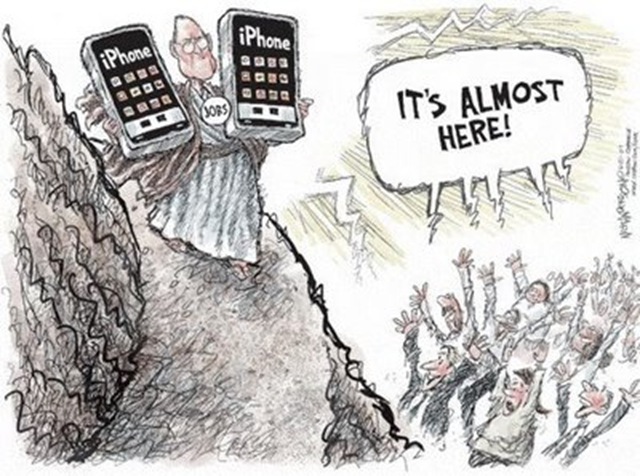
    Change that to an iTouch Comic and it would be perfect.

    Youtube works seamlessly as well.

    Now, the Syncing experience is something else. If I plug my iPod into my laptop instead of my PC ( keeping in mind I originally used my PC to Sync the iTouch), I get asked if I want to erase my iTouch and sync new music to it. Now my library is exclusively ripped CD’s that I’ve bought myself. Shouldn’t iTunes recognize that I already have music from the library ( both my laptop and PC use the same iTunes library out of a shared network location on my server) and shouldn’t it allow me to add, change or delete the playlists/music on my iTouch???

    Now if there was a way to sync shared  library music (i.e from iTunes running over the server and sharing its library) to my iPod, there wouldn’t be this problem ( if there is, please post a comment. Thanks). 

    Podcast subscriptions work great. Already subscribed to Scott Hanselmann.

    Can’t complain about anything else. the design is great. the interface is supurb. Take how the screen gently coasts to a stop when you’ve finished scrolling. The whole flipping thing is really great. I’m getting used to it and its quite responsive when you know what to do.

    My mother was using it quite well with out even being told what to do. She still asks me about emails.

    Can’t wait for the SDK to come out. I’m assuming that the iPhone SDK is also for the iTouch. Can’t wait till I can say: “Pimp my iTouch”.

    Dear Steve:

    We hold these truths to be self-evidently pie in the sky, that all bloggers are created equal, that they are endowed by their Computers and iPhones with certain unalienable Rights, that among these are lots and lots of Links, [JavaScript, Flash] and the pursuit of AdSense Dollars

    Ken Newsome

    PS added in the bit about Javascript and Flash myself.

    I Went Out and Bought One – iPod Touch

    Does Steve Jobs have knack for designing things, or is it just me????

    After ranting an raving here and else where about how I’d never buy an iPod unless DRM was sorted out, guess what? I Went Out and Bought One.

    The Glasgow Apple Store is quite something. I was really impressed since I’d never been to an Apple store.  All the customer space is given over to Display models. There were iPhone between each iMac, MacBook, Apple TV, etc. The only retail items on display, as far as I could tell, were the iPod/iPhone accessories and the software. To get anything you ask one of the assistants who will get it for you from the back of the store. this works really well since it allows customers to focus on the devices. You can see Apple Design throughout the store.  

    And I still can’t belive the sheer size of the 24″ iMac. It literally defies belief. I’ll put it this way, getting out of the store is far harder than getting in to it.

    Picked up some earphones to go over my ears rather than inside them ( I can’t stand the standard earphones). And the guy got my iTouch. Purchasing was painless. The place felt like Steve himself had trained the staff and approved the decor.

    And now my iTouch is charging after registering with iTunes. The one thing that really got me was that you can’t use it out-of-the-box. You need have an Internet connected PC running the latest version of iTunes and you can use it only after you  have registered it.

    Since my library is mainly WMA files and stored on my Windows Home Server, I installed iTunes on the server and set it to work re-encoding my library and putting it in a dedicated iTunes shared folder. Fortunately I only have about 2000 songs so its not a lot *(Mind you, iTunes seems to have made it mind up that there are only 791 songs in said library. Hmmmm) . Its been running an hour and done nearly 400 songs, so a few hours and then I can sync music to  my iPod Touch.

    Setting up Wi-Fi was painless insofar as I needed to change my key to make it slightly easer to type on the iPod because of the keyboard. The keyboard isn’t bad at all. In fact its a lot better that I  thought it was after reading various blogs on the subject. You can very easily hit the wrong key the first few times that you use it, but it quickly grows on you, and you get better and better at using it.

    I’m impressed at the minimal  packaging of the iPod. The earphones had more by at least an order of magnitude.

    The other thing is I strongly suggest you get a case. It looks rather fragile in the sense that it can be easily scratched. So I’m picking that up next week from said Apple Store.

    All hail his Steveness…… 🙂

    Amazon Kindle

    Scoble says he’s under an NDA so can’t talk much, but does point us to this NewsWeek story about it.

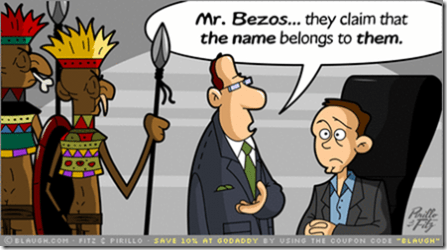
    Another Pending Lawsuit for Amazon.com

    Couldn’t resist 🙂

    Here’s more from that that NewsWeek story (which seems to have it pretty much covered):

    [Note: the whole story is worth a read. These re just the highlights.]

    This week Bezos is releasing the Amazon Kindle, an electronic device that he hopes will leapfrog over previous attempts at e-readers and become the turning point in a transformation toward Book 2.0. That’s shorthand for a revolution (already in progress) that will change the way readers read, writers write and publishers publish.

    Amazon has worked hard to get publishers to step up efforts to release digital versions of new books and backlists, and more than 88,000 will be on sale at the Kindle store on launch. (Though Bezos won’t get terribly specific, Amazon itself is also involved in scanning books, many of which it captured as part of its groundbreaking Search Inside the Book program. But most are done by the publishers themselves, at a cost of about $200 for each book converted to digital. New titles routinely go through the process, but many backlist titles are still waiting. “It’s a real chokepoint,” says Penguin CEO David Shanks.) Amazon prices Kindle editions of New York Times best sellers and new releases in hardback at $9.99. The first chapter of almost any book is available as a free sample.

    The Kindle is not just for books. Via the Amazon store, you can subscribe to newspapers (the Times, The Wall Street Journal, The Washington Post, Le Monde) and magazines (The Atlantic). When issues go to press, the virtual publications are automatically beamed into your Kindle. (It’s much closer to a virtual newsboy tossing the publication on your doorstep than accessing the contents a piece at a time on the Web.) You can also subscribe to selected blogs, which cost either 99 cents or $1.99 a month per blog.

    The subscriber charge for blogs definitely is a bad move since it limits your audience. I mean Scoble’s 600 feeds at $1.99 does turn out to be a lot of money. Even my modest reading list at 130 blogs makes reading on the Kindle prohibitive

    Now comes the Kindle, which Amazon began building in 2004, and Bezos understands that for all of its attributes, if one aspect of the physical book is not adequately duplicated, the entire effort will be for naught. “The key feature of a book is that it disappears,” he says.

    While those who take fetishlike pleasure in physical books may resist the notion, that vanishing act is what makes electronic reading devices into viable competitors to the printed page: a subsuming connection to the author that is really the basis of our book passion. “I’ve actually asked myself, ‘Why do I love these physical objects?’ ” says Bezos. ” ‘Why do I love the smell of glue and ink?’ The answer is that I associate that smell with all those worlds I have been transported to. What we love is the words and ideas.”

    That is really important. I still buy my newspapers and books from a bookstore. Nothing beats the smell of ink and the texture of finely sliced and diced wood shavings ( 🙂 ).

    Though the Kindle is at heart a reading machine made by a bookseller—and works most impressively when you are buying a book or reading it—it is also something more: a perpetually connected Internet device. A few twitches of the fingers and that zoned-in connection between your mind and an author’s machinations can be interrupted—or enhanced—by an avalanche of data. Therein lies the disruptive nature of the Amazon Kindle. It’s the first “always-on” book.

    This leads to ever grander possibilities. I have on my bookshelf The Great war For Civilization: the Conquest of the Middle East (Ironically, I link to Amazon.com here), written pre-Gulf War 2. Wouldn’t it be absolutely marvelous if the book updated itself for a modest fee on publication of a second edition? Or if my Wrox ASP.Net 2.0 magically jumped versions to 3.0 0r 3.5? that would be great.

    Updates, no problem—in fact, instead of buying a book in one discrete transaction, you could subscribe to a book, with the expectation that an author will continually add to it. This would be more suitable for nonfiction than novels, but it’s also possible that a novelist might decide to rewrite an ending, or change something in the middle of the story. We could return to the era of Dickens-style serializations. With an always-on book, it’s conceivable that an author could not only rework the narrative for future buyers, but he or she could reach inside people’s libraries and make the change. (Let’s also hope Amazon security is strong, so that we don’t find one day that someone has hacked “Harry Potter” or “Madame Bovary.”)

    As usual, they beat me to the observation. I like the idea of returning to Dickens era serialization, it’s antiquated, almost – dare I say it- bookish.

    But, nonetheless, this is an exciting step from Amazon. The whole idea is revolutionary ( if, that is, the implementation stands up to our high expectations).

    Would I get one? Let’s wait for the announcement.